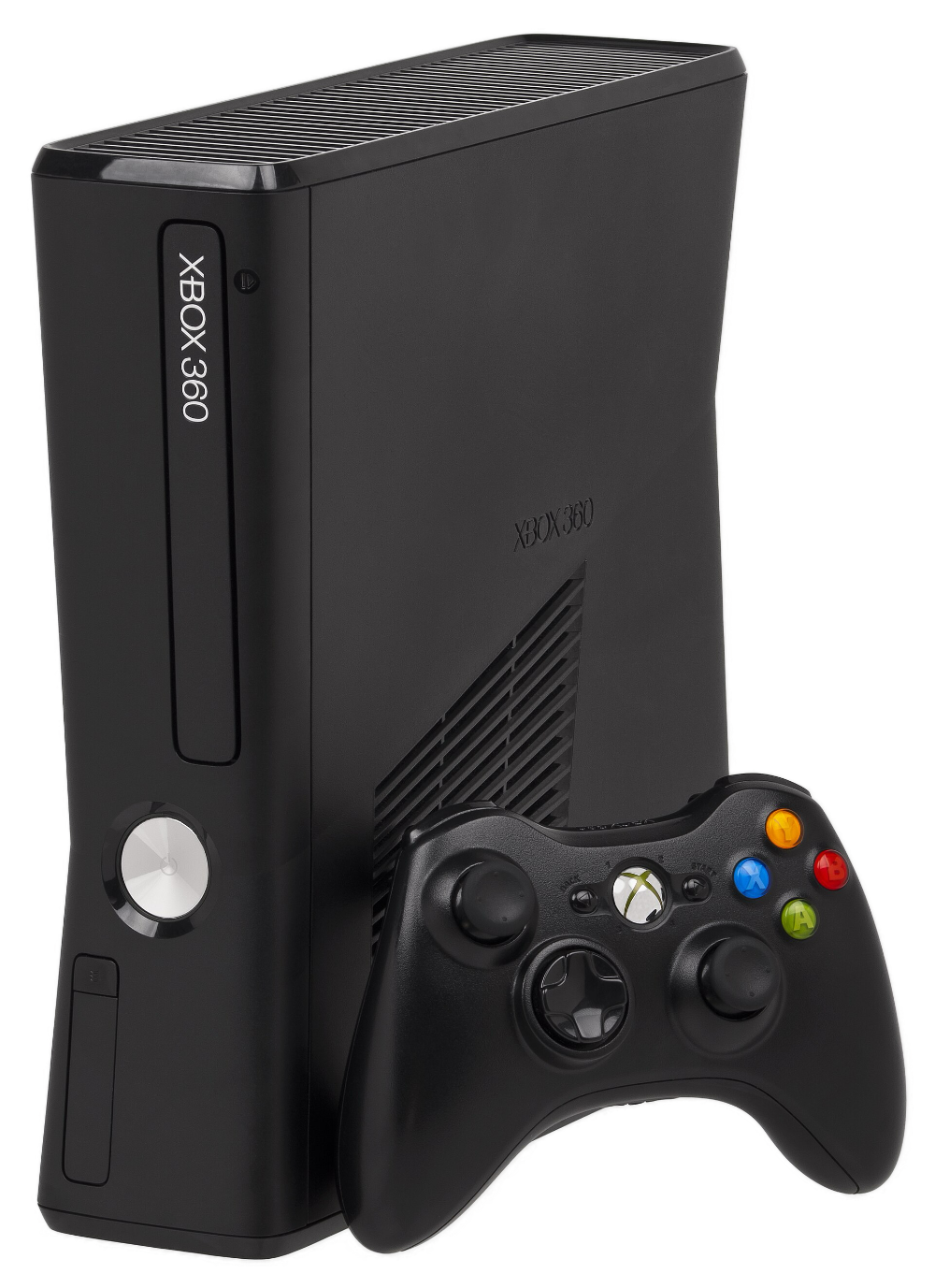
The Xbox 360, released in 2005, was Microsoft’s second home console and the successor to the original Xbox. It launched nearly a year ahead of its main competitors—the PlayStation 3 and Nintendo Wii—giving Microsoft an early foothold in the seventh generation of gaming. Built around a custom PowerPC-based triple-core processor, the Xbox 360 emphasized high-definition gaming, online connectivity, and digital content distribution. Its sleek design, wireless controllers, and focus on online infrastructure helped position it as a powerful entertainment platform for both gamers and multimedia users.
One of the Xbox 360’s defining features was Xbox Live, Microsoft’s online service that provided matchmaking, digital downloads, achievements, and social features that became industry standards. The Xbox Live Marketplace allowed players to purchase downloadable games, demos, DLC, and movies, helping popularize digital distribution on consoles. The system hosted many iconic titles including Halo 3, Gears of War, Mass Effect, Forza Motorsport, Fable II, and The Elder Scrolls V: Skyrim. Xbox Live Arcade also gave independent developers a platform to release smaller digital titles such as Braid, Castle Crashers, and Limbo.
Despite early hardware issues—most notably the infamous “Red Ring of Death” caused by overheating—the Xbox 360 went on to become one of Microsoft’s most successful consoles. Over its lifespan it sold more than 84 million units worldwide and received several hardware revisions, including the quieter and more reliable Xbox 360 S and Xbox 360 E models. With its strong online infrastructure, major exclusive franchises, and a massive third-party library, the Xbox 360 helped redefine modern console gaming and solidified Microsoft as a major force in the industry.
Xbox 360 Technical Specifications
| Component | Specification |
|---|---|
| CPU | IBM Xenon, 3-core PowerPC @ 3.2 GHz |
| GPU | ATI Xenos @ 500 MHz with unified shader architecture |
| RAM | 512 MB GDDR3 unified system memory |
| Resolution | Up to 1920×1080 (HD), native support for 720p and 1080i |
| Media | Dual-layer DVD-ROM (8.5 GB); optional HD DVD add-on drive |
| Storage | Detachable HDD (20 GB–320 GB depending on model) |
| Controllers | Wireless controller with vibration; USB wired version available |
| Online Service | Xbox Live (multiplayer, digital marketplace, achievements) |
| Connectivity | Ethernet, Wi-Fi (built-in on later models), USB 2.0, HDMI |
| Release Date | November 2005 (North America), December 2005 (Europe/Japan) |